A booked tour is one of the most valuable things in your pipeline, and it can still slip away in three places: the prospect doesn't turn up, the tour happens but ends without a clear next step, or they leave to "think about it" and the decision drifts. This guide covers that stretch, from the moment a tour is booked to the moment the prospect decides, ideally with a deposit.
Getting tours booked in the first place is covered in our guide to getting more venue bookings. The first reply and the follow-up before a tour have their own guides on response time and inquiry follow-up.
Start With Two Numbers From Your Own Records
Before changing anything, find out where your tours stall. You need two rates, both calculated from your own records:
- Show rate = tours attended ÷ tours booked. Count each prospect once, even if their tour was rescheduled. Only count tours whose appointment date has already passed.
- Tour-to-deposit rate = deposits received ÷ tours attended. Count only deposits from those same attended prospects, each once, within a fixed window after the tour that you choose in advance (for example, 30 days).
Keep outcomes separate rather than calling everything a no-show: attended, no-show, cancelled in advance, rescheduled to a date that hasn't arrived yet, and still pending. Leave the pending and future ones out of both rates until they resolve. For tour-to-deposit comparisons, use tours whose full observation window has elapsed; leave newer tours pending.
Use at least your last 20 tours whose dates have passed, or the last three months if you have fewer. Resist comparing yourself to published benchmarks: tours work differently at a wedding barn, a banquet hall and a rooftop, and many published figures don't say where they come from. Your own trend over time is the useful comparison.
A Worked Example (Illustrative)
The figures in this example are illustrative, not from a real venue. Replace them with your own.
Say 30 unique prospects had a tour date that fell in the last quarter, and you're measuring at least 30 days after the last tour in that cohort. 21 attended, including 3 whose tours were rescheduled, and 9 didn't: 7 were no-shows and 2 cancelled in advance. That's a show rate of 21 ÷ 30 = 70%. Of those 21 attended prospects, 6 paid a deposit within 30 days of their tour: a tour-to-deposit rate of 6 ÷ 21, about 29%. For the 15 who toured and didn't book, the owner's notes show 5 chose another venue, 3 had a date or budget that didn't fit, and 7 said they'd think about it and never received a written follow-up.
Three things stand out. The 9 missed tours are a reason to check confirmations and reminders: look at whether the 7 no-shows and 2 cancellations got a confirmation and a reminder, and what they said when they cancelled. Having more missed tours than deposits doesn't by itself prove reminders are the cause. The 7 undecided prospects with no written follow-up point to a same-day proposal and a follow-up plan. And the 3 poor fits suggest sharper questions before the tour. None of this says what the rates should be; it shows where to look first.
Before the Tour: Confirm, Remind, Make Rescheduling Easy
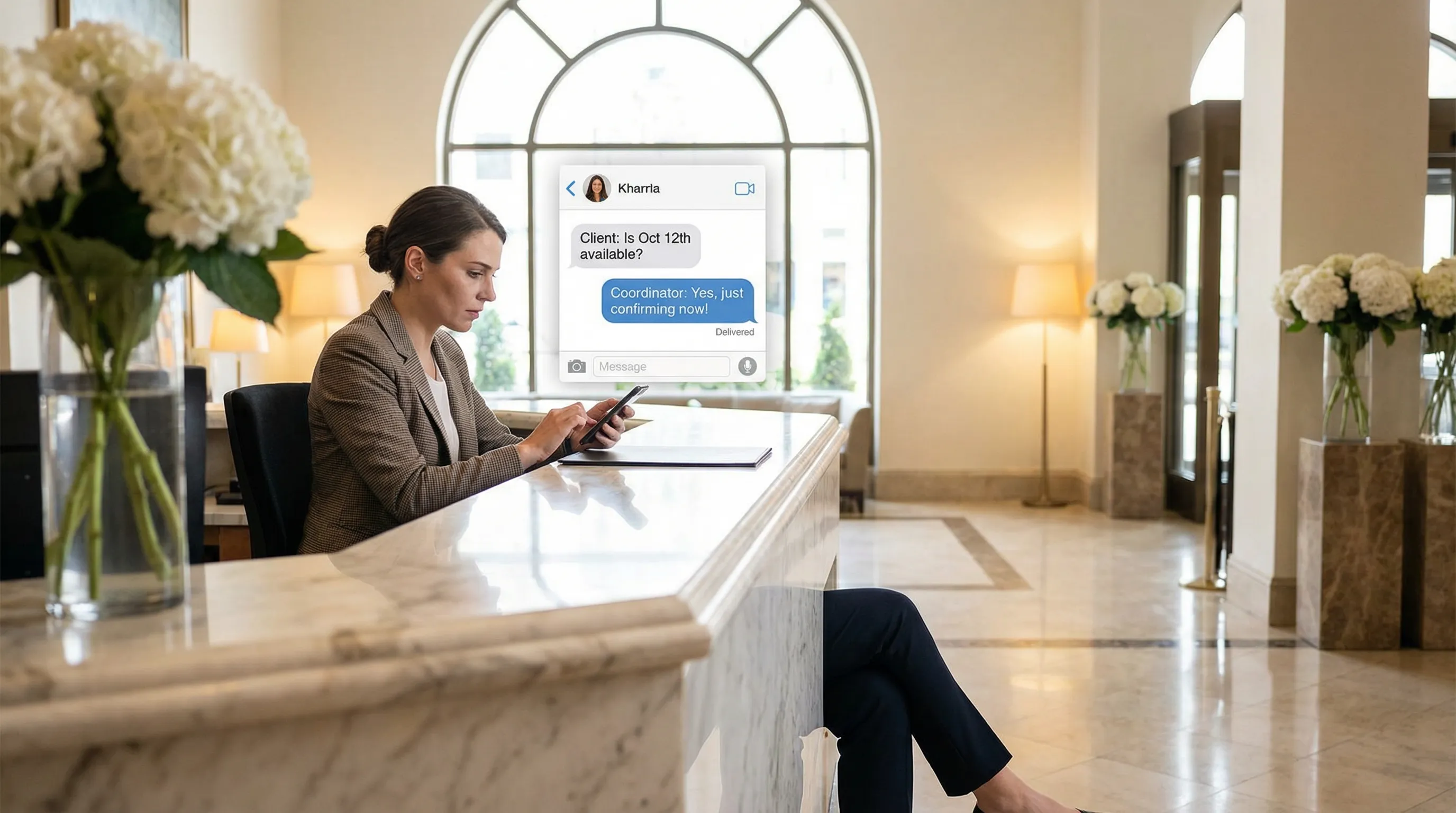
- Confirm straight away with the date, time, address, parking, who they'll meet and how long it takes
- Remind them the day before and again on the day, on the channel they used to contact you. Use text only if they gave you their number for that.
- Include a one-click way to reschedule. Someone who can't make it and has to email to rearrange often just doesn't come.
- Ask who else is involved in the decision (partner, parents, planner, the colleague who signs off) and invite them
- If a reminder gets no response, a short personal message from the person running the tour is more likely to get a reply than another automated one
Most calendar and CRM tools can send confirmations and reminders automatically. Check what yours actually sends, and when, and read it the way a prospect would. Our CRM guide covers setting up the reminder rule itself.
Before the Tour: Ask the Questions That Shape It
A tour built around their event is more useful than a general walkthrough. Before the visit, confirm:
- Their date or date range, and that it's still open
- Guest count and event type
- Budget range, and whether they've seen your starting prices
- What matters most to them: ceremony on site, catering, accessibility, rain plan, parking, sound limits
- Who is coming and who else needs to agree
If the answers show a clear mismatch, such as the date is gone, the guest count is over capacity or the budget can't reach your minimum, it's kinder to say so before the tour than after it.
During the Tour: A Simple Run-of-Show
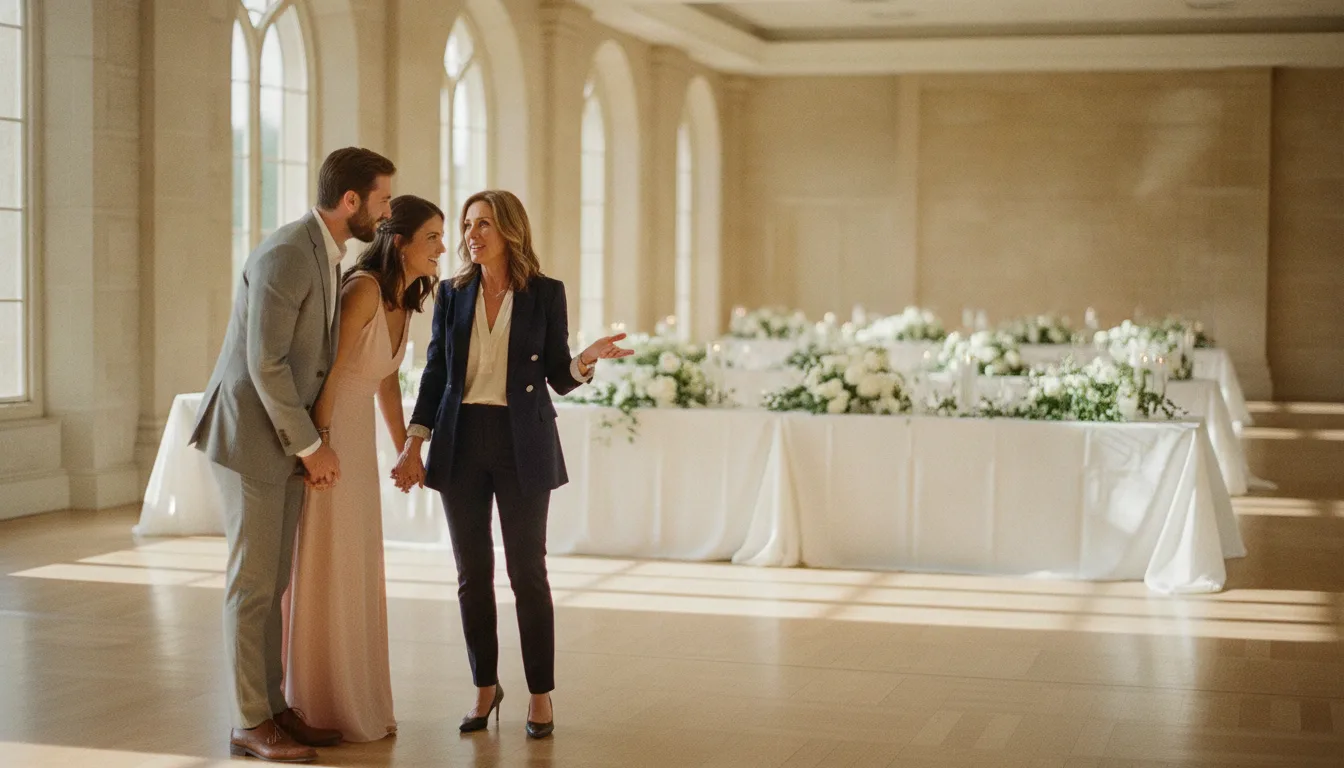
- Welcome them and spend two minutes recapping what you know about their event, so they can correct it
- Walk the space in the order their event would happen (arrival, ceremony or opening, drinks, dinner, dancing or presentations, departure), using their guest count and layout
- Show the practical details they'll worry about later: catering access, restrooms, accessibility, load-in, parking, and the rain or weather plan
- Sit down for ten minutes to go through the package or options that fit their date and guest count, and answer price questions directly
- Ask how the venue compares with the others they're considering, and what would stop them booking
- Agree the next step before they leave
Take notes during or straight after the tour: who came, what concerns they raised, and what you promised to send. Those notes are what make the follow-up specific.
End With a Clear, Honest Next Step
A tour that ends with "let us know!" leaves the next move to the prospect. End with something concrete instead:
- Ready to book: explain the deposit amount, what it secures and how to pay, and send the agreement the same day
- Close to deciding: offer a short, time-boxed hold on their date if your policy allows one, and say exactly when it expires
- Need to consult someone: agree a date for a call, and send the proposal the same day so they have it in hand
- Not a fit: say so, and point them somewhere useful if you can
Don't invent urgency. If someone else really is considering the same date, say so plainly; if not, don't imply it. A hold that expires when you said it would is more credible than pressure.
No-Shows and "We Need to Think About It"
A no-show isn't necessarily a lost lead. The same day, send one short message offering two or three new times and a reschedule link, without guilt. If there's no response, move them into your follow-up process rather than deleting them.
"We need to think about it" is often a reasonable answer to a big decision. Ask what they need in order to decide (an answer on price, another venue to see, a family member to consult) and agree when you'll speak next. From there, our follow-up guide covers what to send to prospects who toured but haven't decided.
Tour Checklist
- Calculate your show rate and tour-to-deposit rate from your own last 20 or more tours
- Confirm every tour immediately with the practical details
- Send reminders on the prospect's channel, with a one-click reschedule
- Ask the pre-tour questions, and say early if it isn't a fit
- Run the tour in the order of their event, with a sit-down pricing conversation
- End every tour with an agreed next step: deposit, time-boxed hold or a scheduled call
- Send the proposal or agreement the same day
- Record why each toured prospect didn't book, and re-measure next quarter
When Outside Help Makes Sense
Some venues book plenty of tours but don't have someone with the time or sales experience to run every one well. Often the answer is a better process and some practice for the team you have. For venues that can meet its technical requirements, a remote closer is an optional service in which a trained closer runs tours over video; it isn't bundled by default. Outside help fits when the venue is presentable and accurately priced, with meaningful open dates and room for more events, but tours aren't turning into deposits. It isn't the right step yet if you're still resolving licensing, construction, pricing, photography or basic service issues; more inquiries won't fix those. Our results page shows the inquiry-to-payment funnel for one real venue.
If you'd like help finding where your own tours stall, a Venue Booking Leak Audit is a 20-minute call where we map your inquiry-to-deposit funnel, identify the largest leak, estimate its monthly value, and recommend the operating model that fits, including when that model is your own team.
Written by Naya B.
Venue growth strategist at Venyrs — helping event venues grow with proven marketing strategies and automation.