Type 'how to get more venue bookings' into a search bar and you'll get the same advice everywhere: post more on Instagram, run some ads, get listed on more directories, refresh your photos. None of that is wrong. But for most venues, it's the wrong place to start — because most venues don't have an inquiry problem. They have a conversion problem.
If you're getting even a handful of inquiries a week, you already have more booking opportunity than you're capturing. Leads die quietly at every stage: inquiries that sat unanswered overnight, prospects who got one reply and then silence, tours that never got scheduled because scheduling one took four rounds of back-and-forth, couples who toured, said they'd think about it, and never heard from you again. Before you spend a dollar generating more demand, it's worth finding out where the bookings you should already be winning are leaking out.
The Booking Math
Your monthly bookings aren't one number — they're the product of five numbers multiplied together: how many inquiries you get, how many of those get a response while the person is still paying attention, how many are followed up until they make an actual decision, how many book a tour and show up for it, and how many tours end in a signed contract. Because it's multiplication, a weak link doesn't cost you a little — it drags the entire equation down. Double your inquiries while your follow-up is broken and you've mostly doubled your waste.
The same math works in your favor, though. Modest improvements at each stage compound, and the fixes at the top of the funnel's leaky middle are far cheaper than buying more traffic. That's why the levers below are ordered the way they are: from the fastest, cheapest fix to the most expensive one. Ads are last on purpose.
Lever 1: Respond in Under Five Minutes
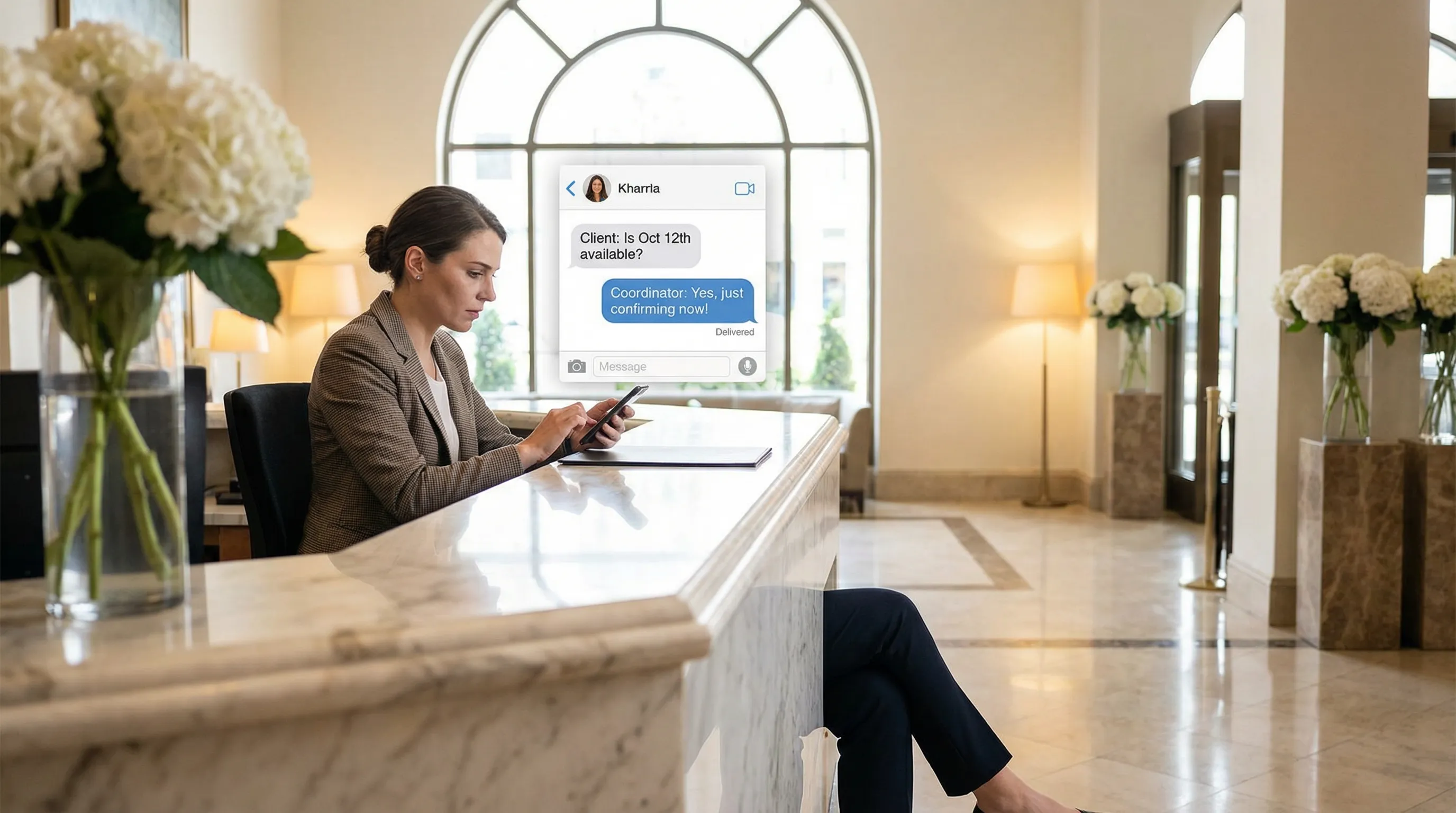
Picture the person inquiring about your venue. It's late evening, they're on their phone, and they've just sent the same inquiry to several venues that looked good online. They aren't going to wait patiently for your reply — they'll keep the conversation going with whoever answers first. By the time a next-morning response arrives, the decision has often already started to form without you in it.
This is the single highest-leverage fix available to most venues, and we've covered how to reply to venue inquiries quickly without living on your phone in detail. The short version: a fast reply doesn't need to be long. It needs to acknowledge their event and date, confirm availability or offer alternatives, and hand them a way to book a tour. If nobody on your team can realistically answer inquiries at 9 PM, an automated system can — the best ones reply in under 60 seconds and read like a helpful human, not a robot.
Lever 2: Never Let a Lead Die
Most venues send one reply, maybe two, and then quietly give up. But people planning an event are juggling a dozen decisions at once, and 'didn't answer your email' almost never means 'chose another venue.' It usually means they got busy. A structured follow-up cadence — several messages spread over a week or two, each one offering something useful — keeps you in the conversation without being pushy.
- Day 1: a recap of what they asked about, plus a direct link to book a tour
- Day 3: a photo gallery or short video of a real event similar to theirs
- Day 6: a client story or review from someone who booked the same type of event
- Day 10: a simple, honest check-in — are you still looking, and is anything holding you back?
Then there's the list you're probably ignoring entirely: everyone who inquired over the past year and never booked. Some chose another venue, but some never picked one, postponed, or have another event coming up. One respectful message — 'you reached out about a spring event a while back, and we'd still love to host you' — costs nothing and regularly revives bookings from leads everyone had written off. Just check your records first so you're never messaging someone who already booked with you. Our venue inquiry follow-up guide covers what to send at each stage, when to stop, and how to re-contact old leads within the permissions you have.
Lever 3: Make the Tour Effortless to Book
The tour is where venues actually get chosen, yet many venues make booking one feel like scheduling a dentist appointment. If your process is 'what times work for you?' followed by three rounds of email, you're losing people in the gap. Every extra step is another chance for them to drift away.
The fix is boring and effective: put a live calendar link in every reply so a prospect can pick a slot and get instant confirmation without waiting on you. Then send automatic reminders before the tour — a couple of days out and again a few hours before — to cut down on no-shows. Scheduling and reminders are exactly the kind of work that should be handled by a system rather than living in someone's inbox.
If you want more venue tours, look at three things before anything else: whether every reply includes a way to book a tour, whether the times you offer are times people can actually come (evenings and Saturdays usually matter), and what happens to people who say 'not yet'. A prospect who isn't ready to tour this month is still a prospect — they belong in the follow-up sequence, not in the archive.
Lever 4: Close at the Tour, Not After It
Sit in on most venue tours and you'll see a beautiful showing followed by a soft ending: 'take your time, let us know!' Then the venue waits and hopes. The problem is that the moment of highest emotion — when someone is standing in your space picturing their event — is also the moment they're most ready to decide. Once they walk out the door, you're competing with every other venue on their list plus plain old inertia.
Closing at the tour doesn't mean pressure. It means having a next step ready: ask directly how the space compares to the others they've seen, answer objections on the spot, and offer to hold their date for a few days while they decide. If they're ready, make it easy to sign then and there. Venues that treat the tour as the decision point — rather than one stop on an endless journey — book more of the people they tour. And venues without a strong salesperson on site are increasingly pairing tours with a remote closer: a dedicated sales professional who joins by video and handles the close. For the full stretch from booked tour to deposit, see our guide to getting booked venue tours to show up and decide.
Lever 5: Generate Demand Only After the Leak Is Fixed
Now — and only now — do ads make sense. Paid advertising is a multiplier on your conversion system, not a substitute for one. Run ads into a venue that answers inquiries the next morning and never follows up, and you're paying to fill a leaky bucket. Run the same ads into a venue that responds in minutes, follows up for two weeks, books tours in one click, and closes on site, and every dollar works several times harder.
The demand-generation playbook itself depends on your venue type — marketing a wedding venue looks different from filling a corporate space or a banquet hall — but the sequence is universal: fix the leak, then pour. If you run a banquet hall, our banquet hall booking plan applies these levers to open dates, package fit, qualification and deposits. Venues that get this order backwards usually conclude that ads don't work, when what actually didn't work was everything that happened after the click. When you are ready to spend, our guide to Facebook ads for venues covers campaign structure, creative and how to set a budget from your own numbers.
If You Run a Wedding Venue
Everything above applies to wedding venues, with three differences that change how you work the levers.
- The date is the product. Couples usually have one date or a short list in mind, so the first reply should confirm availability for their date, or offer the closest open alternatives, before it says anything else about the venue.
- The decision takes longer and involves more people. Couples often book well ahead and involve parents or a planner, so follow-up has to run for weeks, not days, and the tour invitation should make it easy to bring the other decision-makers.
- Your weekends sell themselves more easily than your weekdays. Fridays, Sundays and off-season dates are where most of the unsold inventory sits. Offering them deliberately, and filling weekdays with corporate and private events, recovers revenue that a Saturday-only funnel leaves on the table.
A 20-Inquiry Self-Audit
You don't need software to find your biggest leak. Pull your last twenty inquiries and write down five things for each one:
- How long the first reply took, measured from the moment the inquiry arrived — including nights and weekends
- Whether that first reply confirmed the date and included a way to book a tour
- How many follow-ups the prospect received after the first reply, and over how many days
- Whether a tour was booked, whether it happened, and what was offered at the end of it
- The outcome — booked, lost to another venue, went quiet, or unknown
The stage where most of the twenty stall is your most likely leak and the first place to look — though check whether those leads were ever a fit, because some drop-off is qualification or timing, not a leak. If you can't fill in a column at all — for example, nobody records what happened after a tour — that missing data is a leak in its own right, because you can't fix a stage you can't see.
When Outside Help Makes Sense
Most of these fixes are about consistency, and consistency is hard when the same two people are also running events. Outside help makes sense when you have presentable space, meaningful open dates, a local market with real demand, accurate pricing and availability, and the capacity to host more events — but inquiries still go unanswered, follow-up stops after a message or two, or tours don't turn into deposits. It doesn't make sense yet if you're still resolving licensing, construction, pricing, photography or basic service issues; more inquiries won't fix those. You can see what each Venyrs package includes and who owns what, and the Cool Venue case study shows the full funnel from inquiry to payment for one real venue.
The Honest Summary
There's no secret to getting more venue bookings. The venues that stay booked out aren't the prettiest or the cheapest — they're the ones that treat inquiries like the perishable things they are. Respond in minutes, not hours. Follow up until you get a real answer. Make the tour one click to book. Close while the emotion is still in the room. And only then spend money making the phone ring louder.
Start with the self-audit above. Most owners are surprised by what they find — and the surprise is the point, because some of those gaps may be bookings you can recover without spending anything new on marketing, while others will turn out to be poor fit or bad timing. Work the levers in order and the number moves. If you'd like a second pair of eyes, a Venue Booking Leak Audit is a 20-minute call where we map your inquiry-to-deposit funnel, identify the largest leak, estimate its monthly value, and recommend the operating model that fits — including when that model is your own team.
Written by Naya B.
Venue growth strategist at Venyrs — helping event venues grow with proven marketing strategies and automation.