Most banquet hall owners who want more bookings start by asking for more inquiries. More inquiries only help if they are for dates you can sell, events your packages fit and budgets that work, and if someone turns them into tours and deposits. This guide is an operating plan for that: start with what you have to sell, then work each handoff from the first message to the signed contract.
Start With What You Have to Sell
Before you touch marketing, write down the inventory you actually want to fill over the next six months. For many halls that isn't Saturday night, which often sells itself; it's Fridays, Sundays, weekday evenings and the slower months. Then compare your packages with the events that ask for those dates. Milestone birthdays, quinceañeras, showers, graduation parties, cultural celebrations, memorial receptions and company dinners differ in guest count, catering, timing and budget. A package built for a 250-guest Saturday reception rarely fits a 60-guest Sunday brunch.
- Open dates by day of week and month for the next six months
- The event types you want more of, and the ones you would rather not host
- A minimum spend or package for each day and time slot
- Real capacity for each layout, including catering, staffing and parking
That list becomes your qualification rules. An inquiry is qualified when the date is open, the guest count fits, the event is one you host well and the budget can reach your minimum for that slot. Everything below is about finding more of those inquiries and losing fewer of them.
Map Where Inquiries Come From
Banquet hall inquiries arrive through more channels than most owners track: the website form, phone calls, Instagram and Facebook messages, Google Business Profile, directory listings, walk-ins, and referrals from caterers, DJs and past clients. When they land in different inboxes, some wait a day and some are never answered. Put every inquiry into one list or CRM, note where it came from and record what happened to it. You can't tell which channels deserve more money until you know which ones produce tours and deposits, not just messages.
Marketing Activity vs. Booking-Pipeline Work
It helps to separate two kinds of work. Marketing activity creates inquiries: ads, posts, listings, reviews and vendor relationships. Booking-pipeline work turns inquiries into revenue: the first reply, qualification, follow-up, the tour, the proposal and the deposit. Most halls measure the first and guess at the second. If the pipeline leaks, more marketing mostly makes the leak bigger. Our guide on how to get more venue bookings explains why the order matters and includes a 20-inquiry self-audit you can run this week.
The Four Handoffs, Stage by Stage
Every booking passes through four handoffs. Each one needs an owner on your team, a clear next step and a record of what happened.
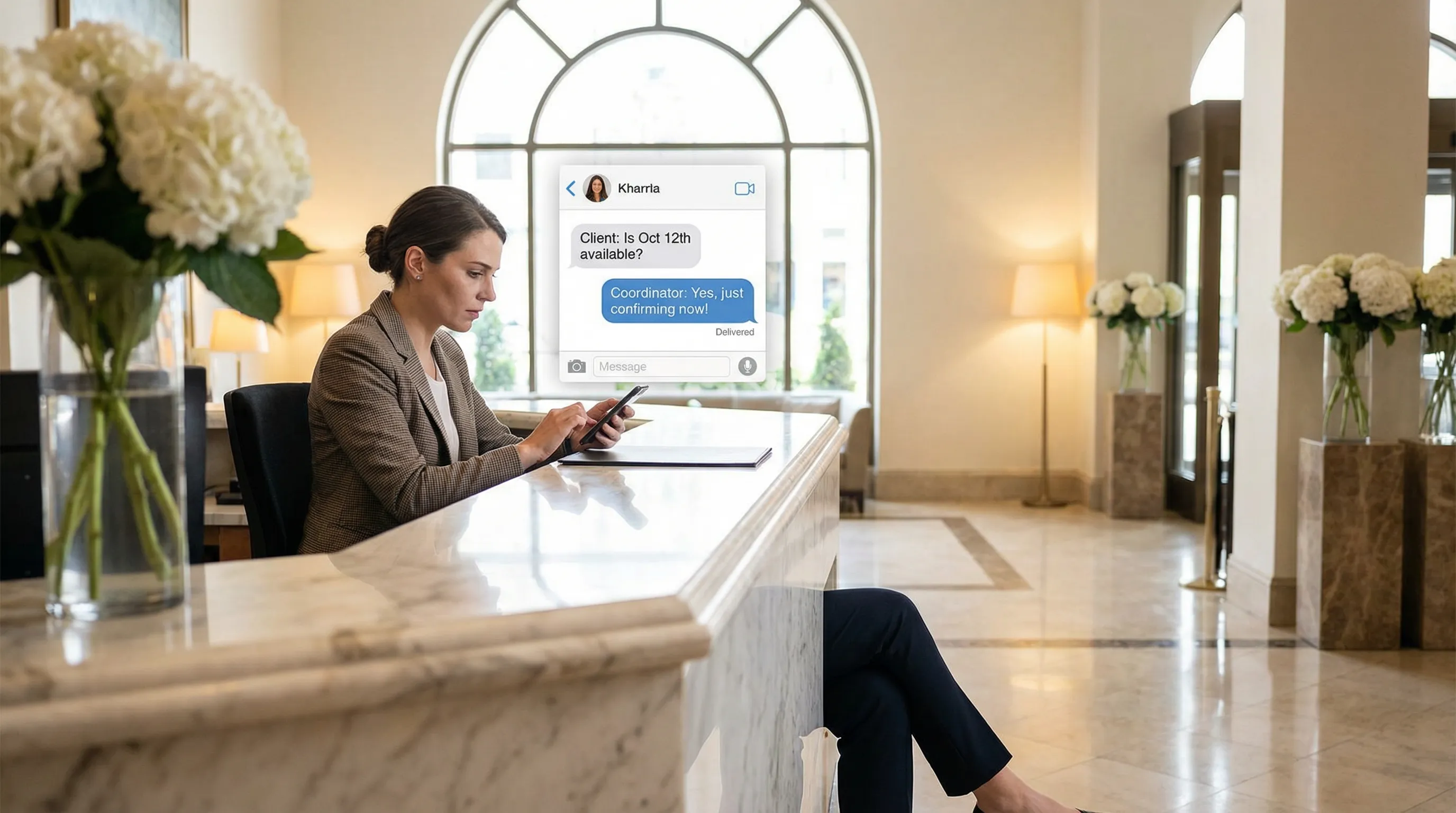
- First reply and qualification. People planning a party often message several halls at once and keep talking to whoever answers first, which is why response time is the first lever on bookings. Confirm whether their date is open or offer the nearest open alternatives, ask the questions that decide fit (event type, guest count, time of day, your catering or theirs) and share a starting price or minimum so nobody tours a hall they can't afford.
- Follow-up until there is a decision. Many inquiries go quiet because the person got busy, not because they chose someone else. Send a short, useful sequence over a week or two (photos of a similar event set up in your room, a package sheet, a tour link) and stop when they book, decline or the date passes. Log the outcome either way.
- Tour booking and the tour itself. Put a live calendar link in every reply, offer evening and weekend slots, and send reminders before the visit. On the tour, show the room set for their kind of event, walk through the package that fits their guest count and budget, and answer catering, timing and deposit questions before they leave.
- Proposal and deposit. End the tour with a specific next step: a written proposal the same day, the deposit amount and deadline, and a short date hold if your policy allows one. If they don't sign, keep following up with answers to the questions they raised. A tour with no next step is where many banquet bookings quietly stall.
An Illustrative Worked Example
The numbers in this example are illustrative, not results from a real venue. They show how to read the funnel, nothing more.
Imagine a hall that receives 40 inquiries in a month. Checked against its qualification rules, 24 are for open dates, fit the room and can reach the minimum. Of those 24, 10 book a tour, 8 attend and 3 pay a deposit. The owner's instinct is to buy more inquiries, but the counts point to two weaker handoffs: only 10 of 24 qualified inquiries reached a tour, and 3 of 8 tours ended in a deposit. Faster replies and steady follow-up are the first things to test on the first gap; a same-day proposal with a clear deposit deadline is the first thing to test on the second. Only this hall's own numbers, tracked over the following months, can show whether either change worked.
Run the Calculation With Your Own Numbers
Pull the last one to three months and fill in these figures:
- A: total inquiries, from every channel
- B: qualified inquiries (open date, fits capacity, an event you host, budget reaches your minimum)
- C: tours booked, and D: tours attended
- E: deposits paid
- F: your average booking value for the dates you want to fill
Then compare the steps. B ÷ A shows whether your marketing reaches the right people. C ÷ B shows whether your reply and follow-up are working. E ÷ D shows whether tours end with a clear next step. The weakest step is usually the cheapest place to start. With small numbers one booking moves a percentage a lot, so read the counts as well as the rates. F × 12 is roughly what one extra deposit a month adds in a year, as gross booking revenue before your costs, not profit. If you can't fill in a letter because nobody records it, that missing record is the first fix.
When Managed Help Fits
Running this yourself works when someone on your team has time to answer inquiries quickly, follow up for weeks and run every tour. Managed help makes more sense when your hall is presentable and accurately priced, you have meaningful open dates and room to host more events, but inquiries still wait, follow-up stops after a message or two, or tours don't turn into deposits. It isn't the right step yet if you're still resolving licensing, construction, pricing, photography or basic service issues. Banquet hall marketing with Venyrs explains how we run that pipeline as a managed service, and our results page shows the inquiry-to-payment funnel for one real venue.
Start with your open dates and the calculation above. If you'd like a second pair of eyes, a Venue Booking Leak Audit is a 20-minute call where we map your inquiry-to-deposit funnel, identify the largest leak, estimate its monthly value, and recommend the operating model that fits, including when that model is your own team.
Written by Naya B.
Venue growth strategist at Venyrs — helping event venues grow with proven marketing strategies and automation.