The event venue industry has shifted dramatically over the past few years. What worked in 2022 — listing your venue on a few directories and waiting for the phone to ring — simply does not produce results anymore. Today's couples, corporate planners, and event organizers start their search online, compare dozens of options in minutes, and expect instant communication. If your venue's marketing hasn't evolved with them, open dates are expiring that didn't need to.
Why Traditional Venue Marketing Is Failing
Most venue owners still rely on the same three channels: The Knot, WeddingWire, and word-of-mouth referrals. These platforms are increasingly pay-to-play. A couple browsing a directory can send the same inquiry to several venues in a few minutes. You're not getting an exclusive lead — you're entering a comparison.
Meanwhile, Google's search results have changed. Local pack results now dominate, meaning if your Google Business Profile isn't optimized, you're invisible. And social media algorithms have shifted away from organic reach toward paid content and short-form video. The venues winning right now aren't the prettiest — they're the ones with the smartest systems.
The Foundation: Your Google Business Profile
Before you spend a dollar on ads, optimize your Google Business Profile. Google says local results are based mainly on relevance, distance and prominence, so the parts you control are relevance and prominence: the right primary category, accurate hours and contact details, a description that says plainly what events you host and where, current photos of the space set up for real events, and a steady habit of asking happy clients for reviews.
Reply to reviews, positive and negative. Google's own guidance is that more reviews and positive ratings can help your local ranking, and that replying shows you value the feedback. Just as important, a prospect comparing venues reads your replies — a calm, specific answer to a critical review often does more for trust than another five stars. (Source: Google Business Profile Help — tips to improve your local ranking.)
Paid Advertising: Meta and Google Working Together
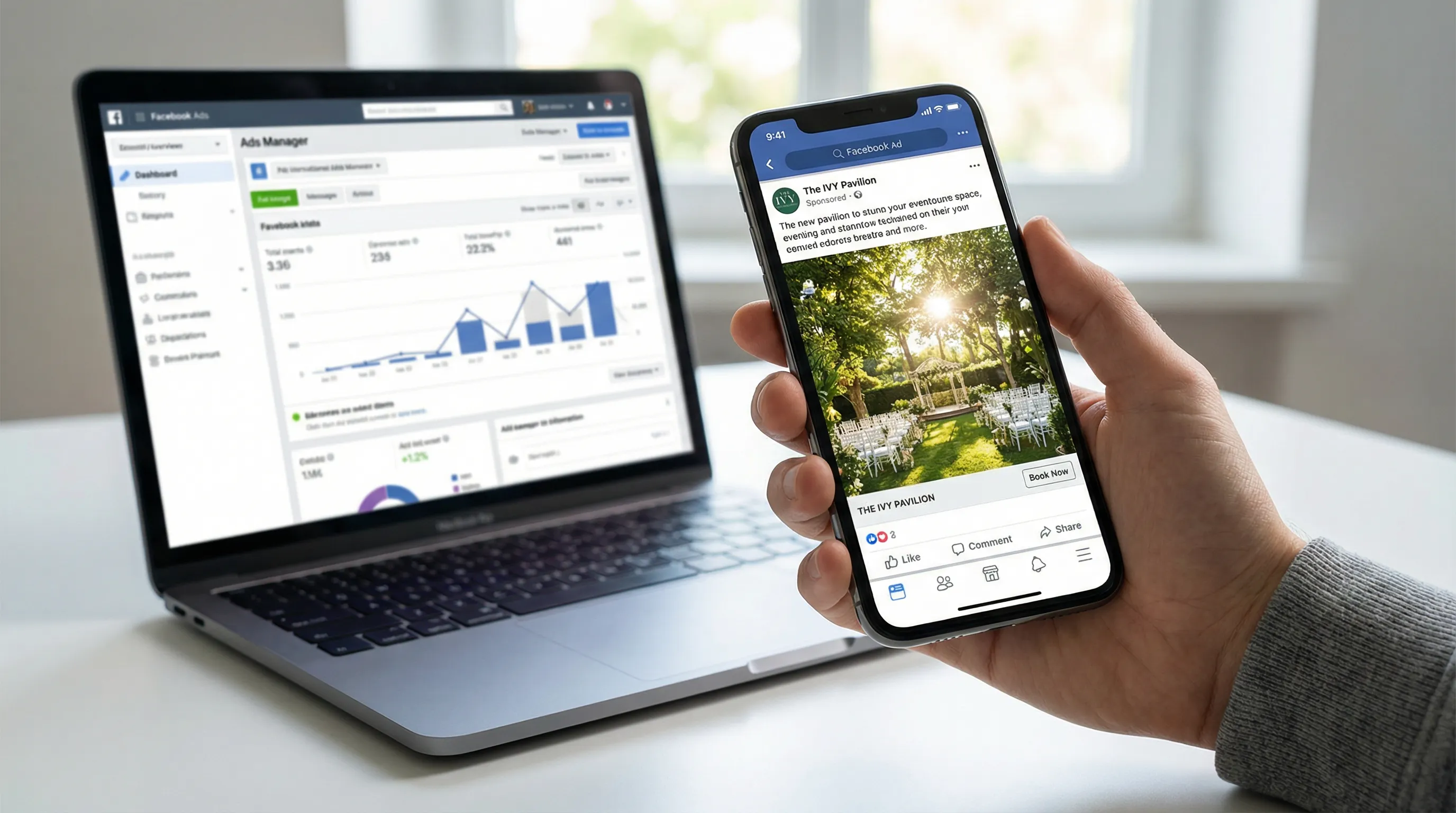
The most effective venue marketing strategy in 2026 uses Meta (Facebook and Instagram) ads for demand generation and Google ads for demand capture. Meta ads put your venue in front of people who haven't started searching yet — newly engaged couples, companies planning their annual gala, families thinking about milestone celebrations. Google ads catch people who are actively searching 'event venues near me' or 'wedding venues in [your city].'
The key is running both simultaneously. Meta ads create awareness and desire. When those same people eventually search on Google, your venue appears again — this time as a familiar name, not a stranger. Our guide to Facebook ads for venues covers the Meta side in detail, including how to set a budget from your own booking numbers rather than someone else's benchmark.
Content That Converts: Beyond Pretty Photos
Every venue has beautiful photos. That's table stakes. What separates high-converting venues is content that answers the questions prospects are actually asking: What does the pricing look like? What's included? Can I bring my own caterer? What does setup and breakdown look like? How many guests can you accommodate for different layouts?
- Create a detailed FAQ page answering your top 20 most-asked questions
- Film 60-second walkthrough videos for Instagram Reels and TikTok
- Publish real event recaps with photos, guest counts, and brief testimonials
- Build a pricing transparency page (even if you show ranges rather than exact figures)
- Share behind-the-scenes content showing your team preparing for events
Wedding venues need a version of this built around the date, because many couples begin with a preferred date or season. Our wedding venue marketing playbook walks through date-first replies, the planning content couples look for and the tour-to-deposit handoff. If you'd rather have that system run for you, see how wedding venue marketing with Venyrs works.
Speed to Lead: The Hidden Revenue Multiplier
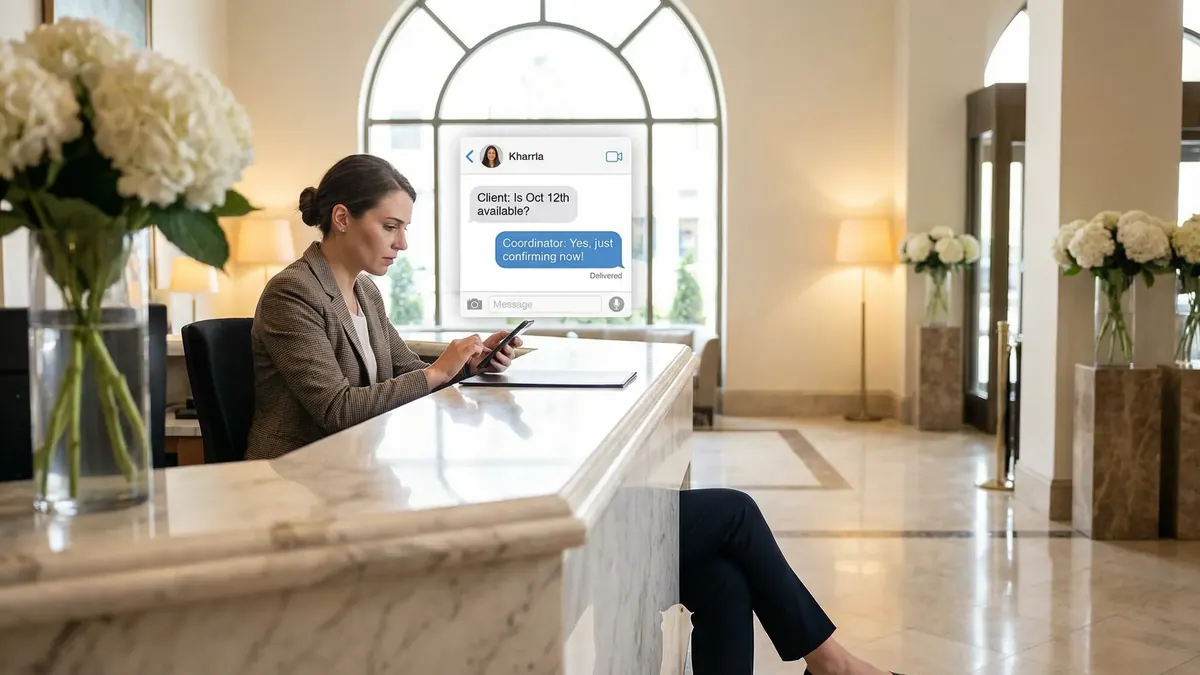
A prospect who has just sent the same inquiry to several venues keeps talking to whoever answers first. If someone inquires at 9 PM on a Tuesday and you respond Wednesday morning, the conversation has often already moved on without you. Venues that respond within minutes — even with an automated but personalized message — get the first conversation, and the first chance to offer a tour.
Implementing a rapid-response system isn't optional anymore. Whether it's a trained staff member monitoring inquiries in shifts or an automated system that qualifies and responds to leads instantly, response time is the first lever on bookings. Measure yours honestly — including nights and weekends — before you spend more on generating inquiries.
Building a Referral Engine
Word-of-mouth is still powerful, but in 2026 it needs to be systematized. Don't wait and hope that happy clients refer you — build a referral program with clear incentives. Offer a $200-500 credit toward a future booking or a direct cash incentive for any referral that converts. Send a follow-up email one week after every event specifically asking for referrals. Partner with complementary vendors — caterers, photographers, DJs, florists — and create a mutual referral network.
Measure the Funnel, Not Just the Marketing
Marketing reports usually stop at impressions, clicks and inquiries. The numbers that decide whether marketing paid off come later: how many inquiries became tours, how many tours became deposits, and what those events were worth after costs. If you only measure the top, you'll keep buying more inquiries for a funnel that loses them. Our guide on how to get more venue bookings includes a 20-inquiry self-audit you can run this week to find where yours leak.
The Bottom Line
Marketing your event venue in 2026 requires a multi-channel approach anchored by a strong Google presence, strategic paid advertising, content that builds trust before the tour, and systems that respond to inquiries faster than your competition. The venues that treat marketing as a system rather than a series of one-off tactics are the ones that turn more of their open dates into booked revenue — including weekdays, where corporate and private events fill dates weddings don't. Start with the highest-leverage activity — your Google Business Profile — and build from there. If you'd like help finding where your own funnel leaks first, a Venue Booking Leak Audit is a 20-minute call that maps your inquiry-to-deposit funnel and recommends the operating model that fits.
Written by Naya B.
Venue growth strategist at Venyrs — helping event venues grow with proven marketing strategies and automation.