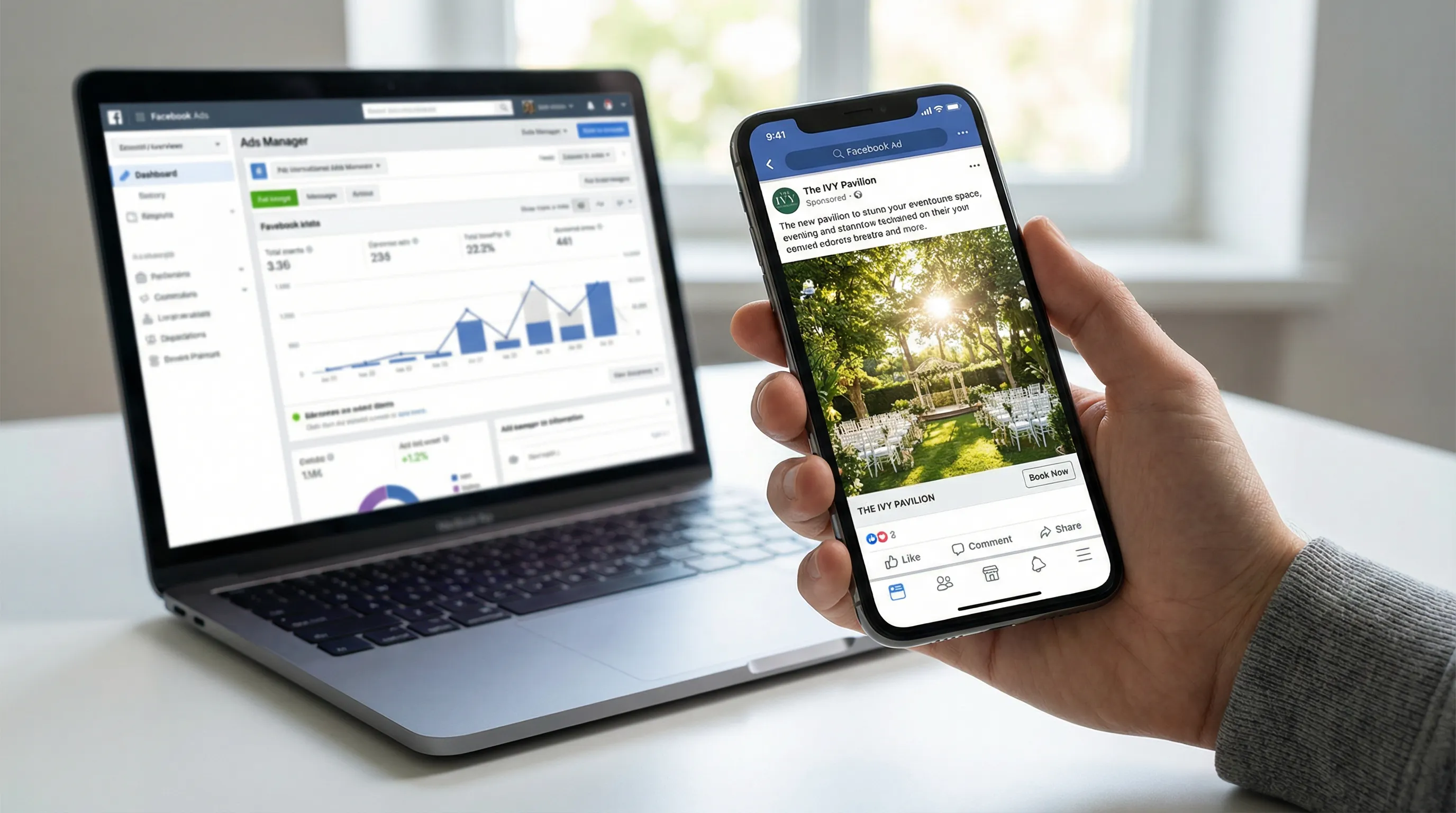
Facebook and Instagram advertising is one of the most powerful tools available to event venues — but most venues do it wrong. They boost a post here, run a generic 'book now' campaign there, and wonder why a monthly budget has nothing to show for it. Meta advertising for wedding and event venues needs a specific structure, creative that shows real events, and — most often overlooked — a venue that can turn the resulting inquiries into tours and deposits.
Why Most Venue Ads Fail
The number one reason venue ads fail is targeting the wrong stage of awareness. Most venues run ads that say 'Book our venue for your next event!' to cold audiences who have never heard of them. This is like proposing on a first date. Cold audiences need to be warmed up first — they need to see your venue, understand what makes it different, and develop a desire to learn more before you ask for the booking.
The second most common mistake is sending all traffic to your homepage. Your homepage is designed for many purposes — it's not optimized for one specific conversion action. Send ad traffic to a dedicated landing page with a single call-to-action (book a tour, check a date, request pricing) and test it against your homepage; let your own numbers decide which one stays.
The Three-Campaign Framework
Successful venue advertising on Meta follows a three-campaign structure that mirrors the buyer's journey: awareness, consideration, and conversion.
Campaign 1 — Awareness: Run video view campaigns showing your venue at its best. These are 15-30 second videos: drone footage of the exterior, a smooth walkthrough of the interior during golden hour, or a time-lapse of an event setup. The goal isn't clicks — it's building an audience of people who have watched your video and now know your venue exists. Budget allocation: 30% of total spend.
Campaign 2 — Consideration: Retarget people who watched 50%+ of your awareness videos with carousel ads showing different event types, client testimonials, or a 'what's included' breakdown. These ads link to a dedicated landing page with more information and a clear CTA. Budget allocation: 40% of total spend.
Campaign 3 — Conversion: Retarget people who visited your landing page but didn't convert. These ads use urgency and social proof: 'Only 6 Saturday dates left for fall 2026' (only when it's true) or a video testimonial from a recent client. Budget allocation: 30% of total spend.
Creative That Converts: Patterns Worth Testing
These are creative ideas worth testing, not proven rules. Run them against each other on your own account and keep what your numbers support.
- Phone-shot walkthrough videos often hold attention better than polished productions — test both
- Test ads showing real events with real people against empty-venue glamour shots
- Test testimonial videos from past clients (even selfie-style) as a conversion ad
- Carousel ads showing 'before setup / during event / guest reactions' tell a compelling story
- Static images still work for retargeting, especially with pricing or availability callouts
- User-generated content from past clients (with their permission) builds trust that staged photos can't
Targeting: Who to Reach
Meta's targeting options change over time and some detailed options have been removed, so build from what Ads Manager offers you today rather than from an old checklist. For wedding venues, start with a sensible radius around the venue, wedding-planning interests where they're still available, and let strong creative do more of the targeting than it used to. For corporate and social events, reach event planners, office managers and business owners in your metro area, and keep the message about weekday availability, capacity and logistics.
Your most valuable signal is people who actually booked, not just inquired. Where your privacy policy and Meta's customer-list terms allow it, a custom audience of past bookers gives Meta a better starting point for lookalike audiences than interests you guess at manually.
Budget and Timeline Expectations
Set the budget by working backwards from your own numbers, not from someone else's benchmark. Start with your average booking value and margin, then your tour-to-booking rate and your inquiry-to-tour rate. Together they tell you what one inquiry is worth to you, and therefore what you can afford to pay for one. Expect a learning period while Meta's delivery settles, and judge campaigns on inquiries, tours and deposits rather than clicks. For one real example with the full funnel and total ad spend published, see The Cool Venue case study.
The Landing Page Makes or Breaks Everything
Your ad is only as good as where it sends people. A high-converting venue landing page includes: a hero image or video of your space, clear pricing information (even if it's a range), three to four client testimonials, a photo gallery showing different event types, a simple form or calendar tool to book a tour, and your phone number prominently displayed. Load time matters too — most ad clicks come from phones, and a slow page loses people before they see your venue.
Stop boosting posts and hoping for the best. Build a structured three-campaign funnel, create authentic content, target the right audiences, and send traffic to a page designed to convert.
Before You Scale the Budget
Ads multiply whatever happens after the click. If inquiries wait hours for a reply, follow-up stops after one message, or tours rarely end in a deposit, more budget mostly buys more waste. Check those stages first — our guide on how to get more venue bookings walks through the five levers and a 20-inquiry self-audit. If you'd rather have someone look at it with you, a Venue Booking Leak Audit is a 20-minute call that maps your inquiry-to-deposit funnel and identifies the largest leak before you spend more on ads.
Written by Naya B.
Venue growth strategist at Venyrs — helping event venues grow with proven marketing strategies and automation.