Wedding venue marketing has two jobs. The first is demand capture: making sure couples searching for a venue in your area find you, understand what you offer and trust you enough to inquire. The second is operations: turning those inquiries into tours, and tours into paid deposits. Most venues invest in the first and improvise the second. This playbook covers both, in the order an owner can work through them.
Step 1: Decide Which Dates and Packages You're Selling
Many couples begin with a preferred date or season. Start by listing your open dates for the next 12 to 18 months and marking the ones that matter most. Peak-season Saturdays often sell with little help; Fridays, Sundays, weekdays and off-season dates are usually where unsold inventory sits. Then check that your packages make sense for those dates. A shorter package or a lower minimum for a winter Friday gives your marketing something specific to offer instead of a general "we do weddings."
- Open dates by month and day of week, with the ones you most want to fill highlighted
- The package or minimum spend for each type of date
- Capacity by layout (ceremony, cocktail hour, reception) and your rain plan
- What's included and what couples arrange themselves: catering, bar, rentals, coordination, vendor rules
Step 2: Build the Proof and Planning Content Couples Need
Couples compare venues on their phones, often late at night, and they're answering practical questions as much as emotional ones. Give them both. Show real weddings at your venue across seasons and guest counts, with permission from the couple and the photographer. Then publish the planning details couples would otherwise have to email you for.
- A gallery of real weddings organized by season or style, with photographers credited
- A planning page or FAQ that answers your 15 to 20 most-asked questions
- Starting prices or ranges, even if the final price depends on date and guest count
- A short walkthrough video of the ceremony, cocktail and reception spaces in the order of the day
- Capacity, vendor rules, timing, parking and accessibility in plain words
- Reviews on your Google Business Profile, with a calm, specific reply to each one
Step 3: Capture the Source and Intent of Every Inquiry
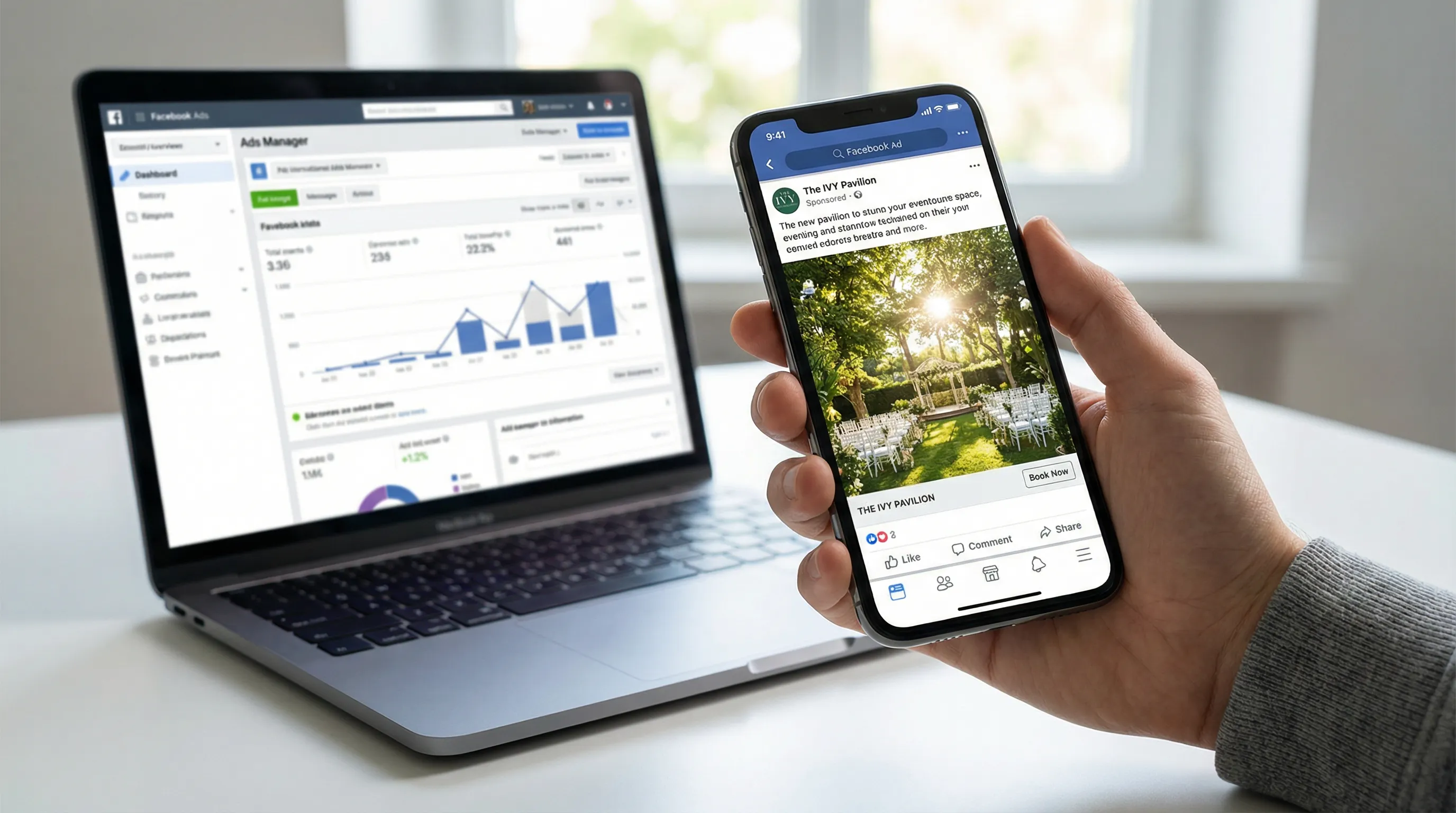
Inquiries arrive from your website, Google, Instagram, wedding directories, vendor referrals and past guests. On every one, record where it came from and what the couple wants: date or date range, guest count, budget range and ceremony plans. Without that you can't tell whether a channel brings couples who book or couples who browse, and you'll keep paying for the wrong ones. If you run paid ads, our guide to Facebook ads for venues covers setting a budget from your own booking numbers.
Step 4: Reply Date-First and Qualify
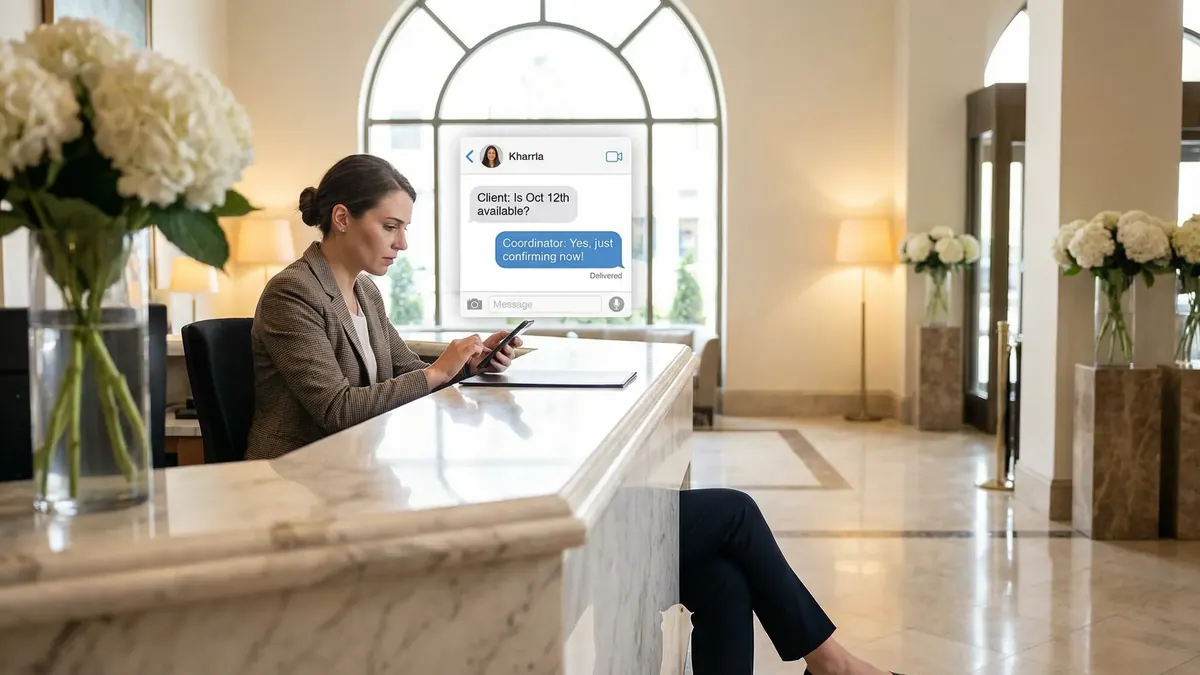
Couples often inquire with several venues at once, and the venue that answers first gets the first conversation, which is why response time is the first lever on bookings. Lead the first reply with their date: confirm it's open, or offer the closest open alternatives. Then ask the few questions that decide fit (guest count, budget range, ceremony on site or elsewhere) and give them a direct way to book a tour. A couple whose date is taken or whose budget can't reach your minimum is better served by a quick, honest answer than a long sequence.
Step 5: Follow Up and Hand Off to the Tour
Wedding decisions take weeks and involve partners, parents and sometimes a planner. Follow-up should run for weeks rather than days and offer something useful each time: a real wedding on a similar date, a sample timeline, an answer to a question they asked. Every message should include a tour link with evening and weekend slots, and the invitation should make it easy to bring the other decision-makers. Send reminders before the tour so fewer are missed. Our venue inquiry follow-up guide covers what to send at each stage.
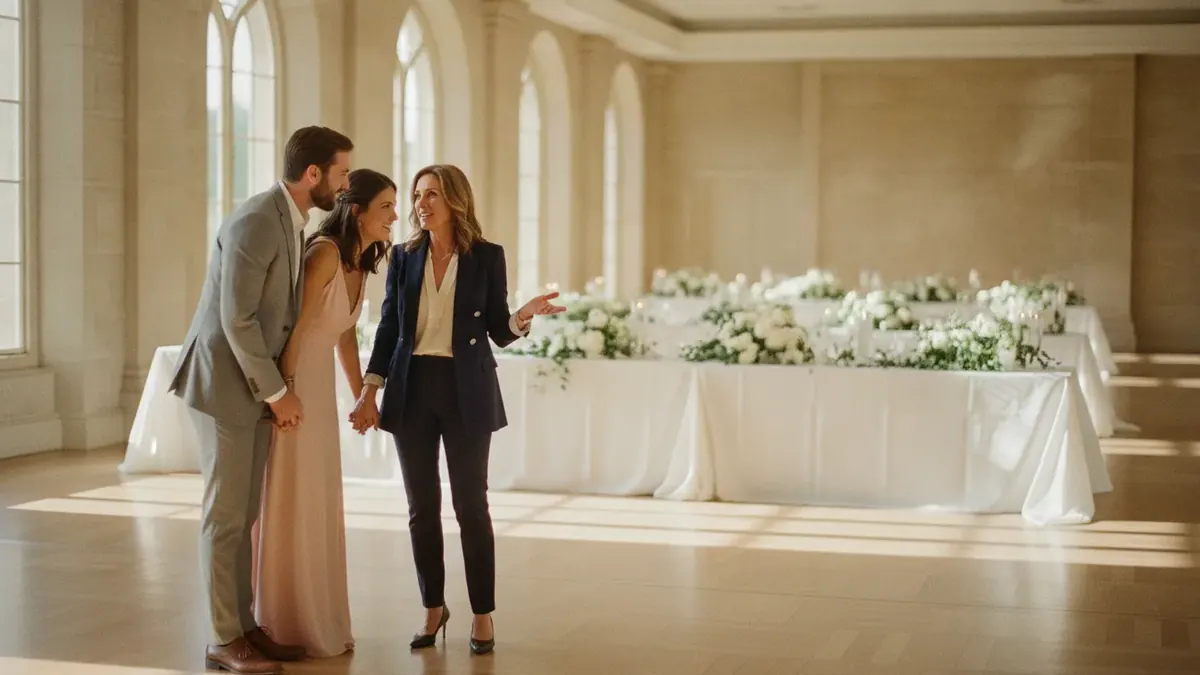
On the tour, walk the day in order (ceremony, cocktail hour, reception) using the couple's own guest count and date. Before they leave, agree a clear next step: a written proposal, the deposit amount and deadline, and a short hold on their date if your policy allows one. Send anything you promised the same day. Don't invent urgency; if another couple really is considering their date, say so plainly, and if not, don't imply it. Our venue tour guide covers show rate, the tour itself and the next step in more detail.
Step 6: Measure the Funnel, Not Just the Marketing
Every month, count each stage: inquiries, qualified inquiries, tours booked, tours held and deposits. The step with the biggest drop is usually where to work next, and it's often not the top of the funnel. Our guide on how to get more venue bookings includes a 20-inquiry self-audit that shows where leads stall.
An Illustrative Planning Example
The figures in this example are illustrative, not from a real venue. Replace them with your own.
Say a venue has 14 open Fridays and Sundays over the next year that it wants to fill, and a wedding on one of those dates is worth V to it on average. Last season it received 60 inquiries for dates like these: 30 were for open dates and within budget, 12 of those couples toured and 4 booked. At those rates, filling 4 more dates takes about 12 more tours, which takes about 30 more qualified inquiries, or fewer if more qualified couples reach a tour. The upside is up to 4 × V in gross booking revenue, before costs. That tells the owner whether the next dollar should go to attracting more couples or to converting more of the ones already asking.
Planning Checklist
- List open dates and the package or minimum for each type of date
- Publish capacity, what's included, starting prices or ranges, and vendor rules
- Keep a current gallery of real weddings, used with permission
- Record source, date, guest count and budget range on every inquiry
- Reply date-first, as fast as you can, with a tour link
- Follow up for weeks with useful information, and log every outcome
- End every tour with a proposal, a deposit amount and a deadline
- Review stage counts monthly and work on the weakest step
When Managed Help Fits
This playbook is the work; the question is who does it. Your own team can run it when someone has time to answer inquiries fast, follow up for weeks and run every tour. Outside help makes sense when your venue is presentable and accurately priced, you have meaningful open dates and room for more weddings, but replies are slow, follow-up fades or tours don't become deposits. It isn't the right step yet if you're still resolving licensing, construction, pricing, photography or basic service issues. Wedding venue marketing with Venyrs explains how we run this system as a managed service, and our results page shows one real venue's funnel from inquiry to payment.
If you'd like to know where your own funnel leaks first, a Venue Booking Leak Audit is a 20-minute call where we map your inquiry-to-deposit funnel, identify the largest leak, estimate its monthly value, and recommend the operating model that fits, including when that model is your own team.
Written by Naya B.
Venue growth strategist at Venyrs — helping event venues grow with proven marketing strategies and automation.